2026-11-12 ·
Replacing an Old Slate Roof on a Johnstown Home
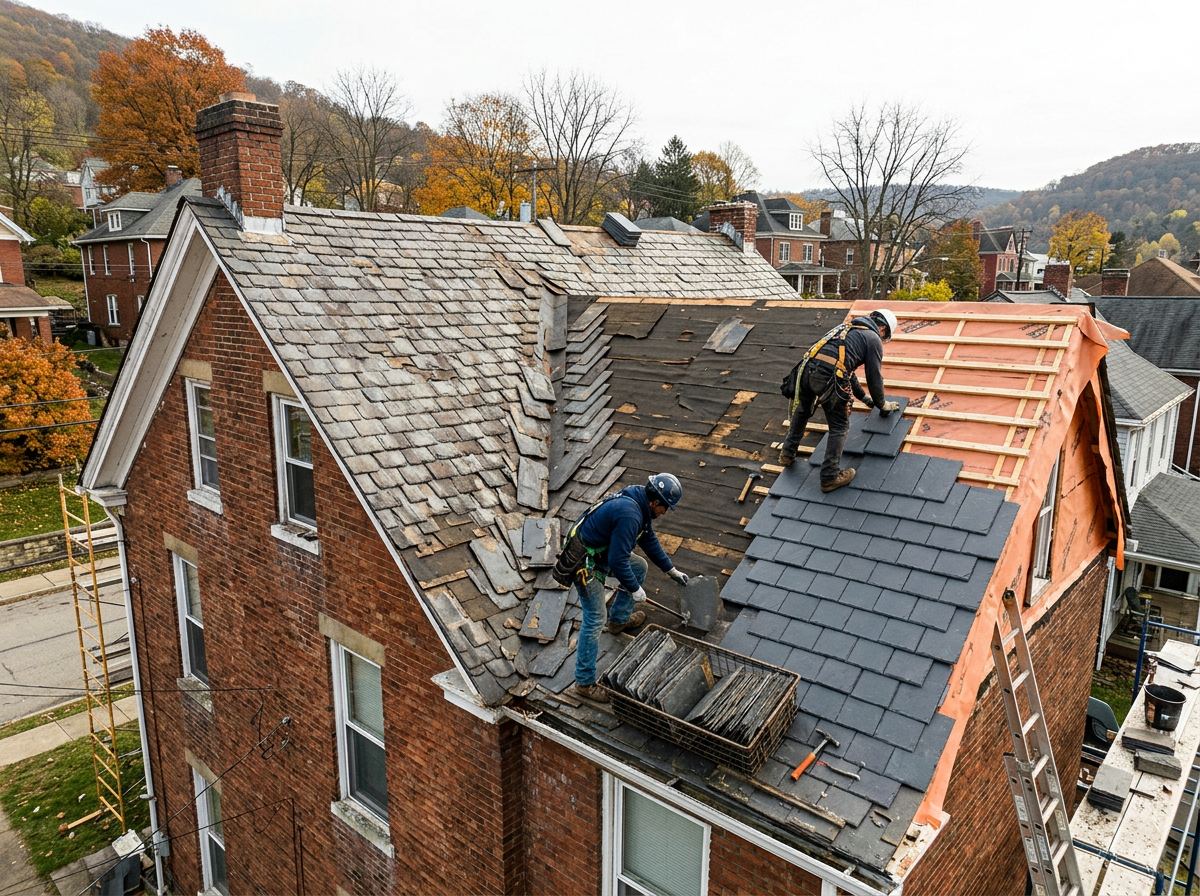
Replacing an old slate roof on a Johnstown home starts with a full tear-off so our crews can examine the original plank decking and install proper underlayment before laying new architectural shingles.
Inspecting Slate Conditions on Local Homes
Johnstown homes built between 1900 and 1940 in neighborhoods such as Moxham, Kernville, and Cambria City often carry original slate that has endured decades of freeze-thaw cycles and heavy snow. Our crews look for cracked or slipped slate, granule loss on any overlay, and signs of sagging decking caused by snow load. Steep hillside lots with narrow access require careful staging so debris does not block streets like PA-271 or Scalp Avenue. We check flashing around brick chimneys and valleys where ice dams form most often. Homeowners in Westmont and Richland Township notice the same patterns on larger early-1900s homes and mid-century ranches alike. When Should Johnstown Homeowners Replace Their Roof? outlines the same inspection points we use on every slate job.
Full Tear-Off and Deck Preparation
Our crews begin every slate replacement with a complete tear-off down to the plank decking rather than layering over existing material. This step reveals any rotted boards or areas needing re-sheathing with OSB or plywood before new underlayment goes down. In the deep valley where the Stonycreek and Little Conemaugh rivers meet, moisture from spring thunderstorms can reach older decking, so we install ice and water shield along eaves, valleys, and around chimneys. Drip edge and starter strip follow to direct water away from the fascia. Homes near the Inclined Plane or Point Stadium often sit on tight lots, so we stage materials efficiently to keep sidewalks clear. The process also includes checking soffit intake vents to maintain attic ventilation balance once the new roof is finished.
Slate-to-Shingle Conversion Details
Many Johnstown homeowners choose architectural shingles after slate removal because the material handles ridge-top wind and hail better than original slate. Our crews install step flashing at walls and chimney counter-flashing to prevent leaks where steep-pitch roofs meet brickwork. Pipe boots and ridge vent complete the system while preserving the look of the Laurel Highlands setting. In areas such as Geistown or Hornerstown, where duplexes and row homes sit close together, the lighter weight of shingles reduces load on older framing. We also address any flat sections over porches by installing modified bitumen before tying into the main slope. Tear-Off and Re-Roof shows the exact sequence we follow on these conversions.
Managing Ice Dams and Ventilation
Laurel Highlands winters bring heavy snow followed by warm days that create ice dams along eaves and valleys on Johnstown roofs. Our crews add extra ice and water shield and ensure soffit-to-ridge ventilation so warm attic air escapes before it melts snow on the roof deck. Homes in Roxbury Park or Stackhouse Park areas often have limited attic access, so we verify existing vents before closing up the new roof. This approach reduces the chance of leaks at valleys during spring thaws. How Ice Dams Damage Roofs in the Laurel Highlands explains why balanced ventilation matters on every replacement we complete.
Final Steps After Installation
Once the architectural shingles are down, our crews reinstall or upgrade gutters and downspouts to carry water away from steep hillside foundations common throughout Cambria County. We walk the roof with the homeowner to point out the new ridge vent, drip edge, and flashing details. The same process applies whether the home sits on Menoher Boulevard in Westmont or along PA-56 near Mineral Point. This careful closeout leaves the property ready for the next heavy snow or summer thunderstorm.