2026-11-12 ·
How Ice Dams Damage Roofs in the Laurel Highlands
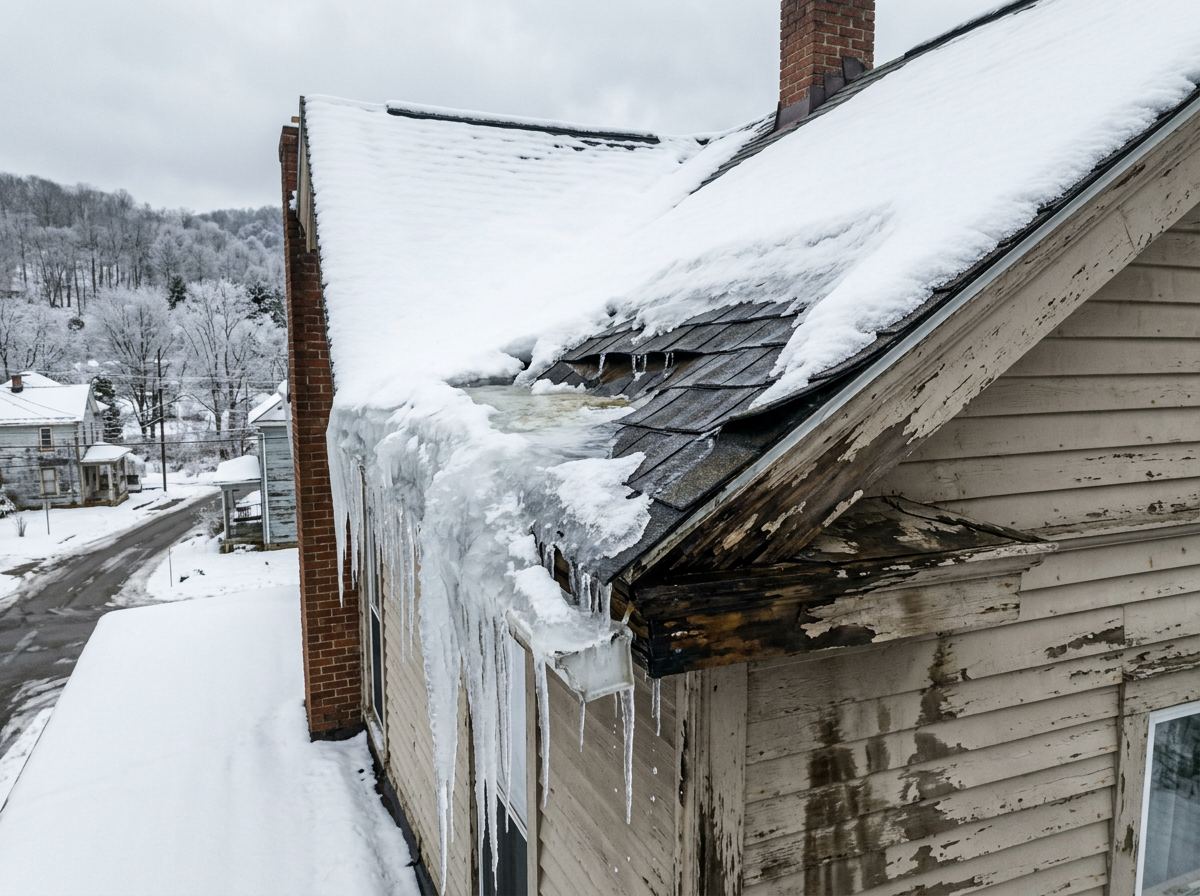
In the Laurel Highlands, ice dams damage roofs when snow melts on warmer roof sections and refreezes at the colder eaves, creating a dam that pushes water under shingles and into the attic space of homes with plank decking.
Freeze-Thaw Cycles and Snow Load on Local Roofs
Johnstown sits in a deep valley where the Stonycreek and Little Conemaugh rivers meet, and this topography traps cold air that intensifies freeze-thaw cycles throughout long snowy winters. Heavy snow load builds on steep-pitch roofs found in neighborhoods like Moxham, Kernville, and Westmont, where many steel-mill-era frame houses from 1900-1940 still carry original slate or layers over plank decking. When daytime sun warms upper roof surfaces, meltwater flows downward until it hits the ice dam at the eaves and valleys. The trapped water finds paths around step flashing, pipe boots, and chimney counter-flashing, then saturates underlayment and reaches the interior. Our crews see this pattern repeat on homes in Richland Township and Geistown where ridge-top winds add more drifting snow. Proper attic ventilation balance with ridge vent and soffit intake vents reduces the temperature difference that drives the cycle.
Water Intrusion Through Shingles and Decking
Once water backs up behind an ice dam, it travels under curling or cupping shingles and through gaps at valleys or around brick chimneys common on Johnstown homes. Plank decking, unlike modern plywood, allows moisture to spread quickly between boards, leading to sagging and rot that affects larger early-1900s homes in Westmont as well as row homes in Cambria City. Hail bruising or missing shingles from prior wind events worsen the entry points, and the constant expansion from repeated freeze-thaw action widens cracks in old slate. In spring and summer thunderstorms that follow winter, any remaining weak spots allow further intrusion. Homeowners in areas along US-219 or PA-56 often notice stains on ceilings first because the water travels along the steep hillside lots before dripping inside. Checking for granule loss in gutters and downspouts after snowmelt helps spot early issues before they reach the living space.
Effects on Slate Roofs and Architectural Shingle Conversions
Many Cambria County homes still have original slate roofs that crack or slip under the weight and pressure of ice dams, allowing water to reach the felt beneath. When these roofs are converted to architectural shingles during a full tear-off, crews add ice and water shield along the lower courses and valleys to limit future backup. The process also includes re-sheathing where plank decking has deteriorated and installing drip edge plus starter strip for better edge protection. Homes in Hornerstown, Roxbury, and Prospect benefit from this approach because their tight access and narrow streets make repeated leak repairs difficult. Readers considering timing can review When Should Johnstown Homeowners Replace Their Roof? for local indicators. Replacing an Old Slate Roof on a Johnstown Home explains the conversion steps that address ice dam vulnerabilities directly.
Practical Checks and Repair Options for Laurel Highlands Homes
Homeowners can inspect from the ground for ice buildup at eaves after heavy snow, look for sagging sections near valleys, and note any attic moisture during cold snaps. On flat roof sections over porches and additions, modified bitumen or EPDM can also suffer from ice dam pressure at transitions. When damage appears, our crews perform targeted ice dam damage repair that includes removing the dam safely, drying affected areas, and replacing compromised underlayment or shingles. This work ties into broader roof ventilation improvements that reduce the temperature swings driving ice dam formation. Properties along PA-271, Menoher Boulevard, or in towns such as Windber and Ebensburg face the same conditions, so addressing ventilation and flashing during any re-roof helps limit recurrence across the region.