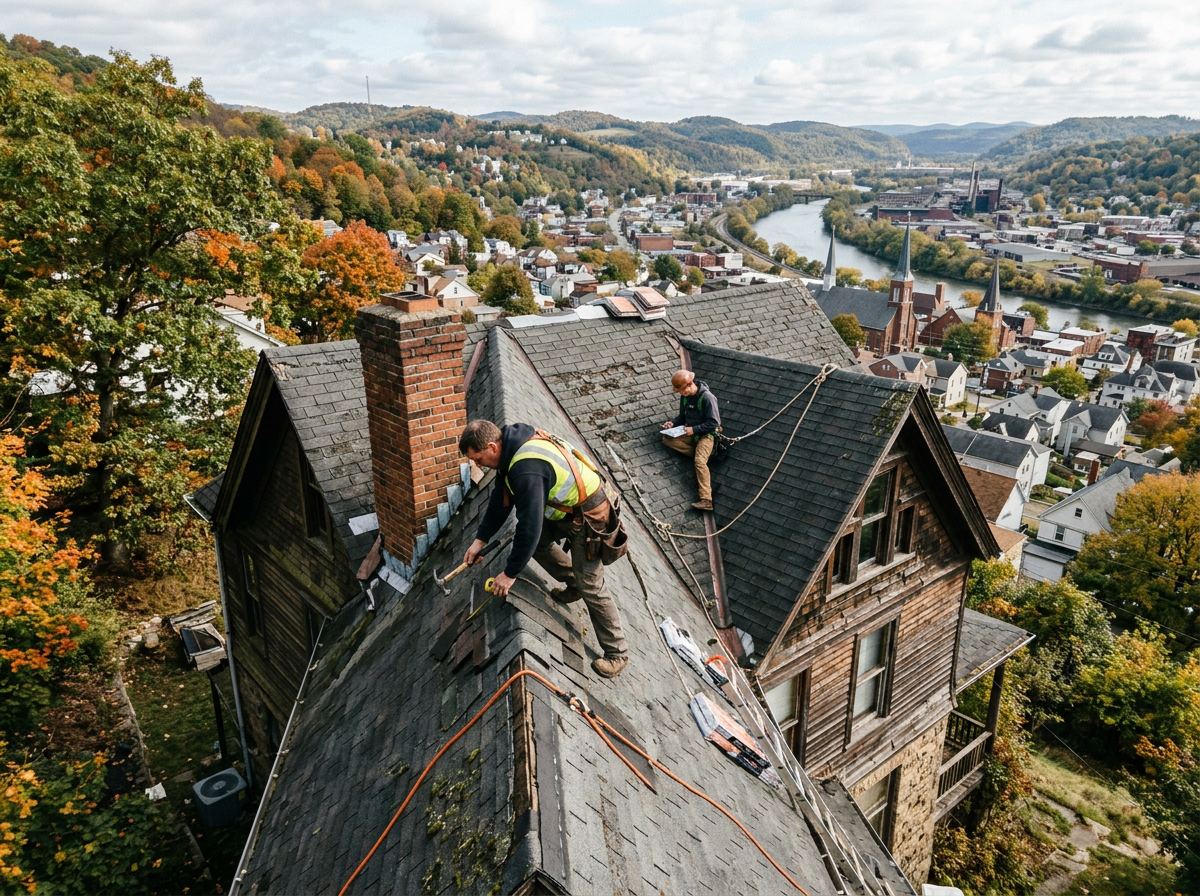
Johnstown sits in a deep valley where the Stonycreek and Little Conemaugh rivers meet, creating steep hillsides lined with early-1900s frame houses and row homes that have plank decking under layers of slate or shingles. Our crews start every roof inspection by walking the roof surface where possible and examining from the ground on tight-access streets in neighborhoods like Moxham, Kernville and Cambria City. We look for granule loss, curling shingles, cracked or slipped slate, missing pieces after wind events, and signs of ice dam leaks at eaves and valleys that form during long Laurel Highlands winters with heavy snow load and repeated freeze-thaw cycles.
Strong ridge-top winds and summer hail storms common along US-219 and PA-56 often bruise shingles or damage flashing around brick chimneys on these older homes. During inspection we check step flashing, chimney counter-flashing, pipe boots and valleys, then move inside to examine attic ventilation balance, soffit intake vents and ridge vent function. We also assess sagging decking and the condition of any flat EPDM or modified bitumen sections over porches and additions that trap water after thunderstorms.
Homes in Westmont and Geistown often have larger early-1900s structures or mid-century ranches on narrow lots where access requires careful ladder placement and safety lines. We document every finding with photos and notes on underlayment condition, drip edge, starter strip and any re-sheathing needs over plank decking before recommending next steps. This inspection helps owners in Richland Township and surrounding Cambria County towns decide whether a full tear-off or targeted repair is needed before the next heavy snow season arrives.
Technician insight
In Johnstown the thing that catches most people out with roof inspection is the plank decking under multiple layers of slate on 1900s homes built on steep lots. Freeze-thaw cycles and ice dams at the eaves often hide until water shows up inside, and the narrow streets in Moxham or Kernville make full access harder than it looks from the road.
Westmont Home With Hidden Ice Dam Leak
A homeowner in Westmont noticed staining near a valley after spring thaw. We found slipped slate and failed step flashing over plank decking that had allowed repeated ice dam water entry. Our inspection documented the extent across the steep pitch and recommended targeted flashing repair before the next winter.
Roof Inspection Services We Offer
✓Slate Roof Inspection
We examine original slate and any later layers on steep-pitch homes in Johnstown for cracked, slipped or missing pieces and underlying deck issues common on 1900-1940 frame houses.
✓Ice Dam Assessment
Our crews check eaves, valleys and attic ventilation on Laurel Highlands homes to identify ice dam leak risks created by heavy snow load and freeze-thaw cycles.
✓Deck Condition Assessment
We inspect plank decking for sagging or rot on older Johnstown roofs and note where re-sheathing with OSB or plywood may be required during future work.
✓Chimney and Flashing Evaluation
We examine brick chimneys, step flashing and counter-flashing on hillside homes in Westmont and Moxham for wind-driven water entry points.
✓Wind and Hail Damage Survey
Our inspection documents granule loss, bruising and missing shingles after ridge-top wind events or thunderstorms on roofs throughout Cambria County.
How it works
- 1
Exterior Walk And Visual Check
We begin on the ground and safe roof sections to note missing shingles, slate condition, flashing issues and signs of ice dam staining around eaves.
- 2
Attic And Ventilation Review
Inside the attic we check ventilation balance, insulation moisture, deck sagging and any signs of past leaks from snow load or wind-driven rain.
- 3
Detailed Documentation
We photograph every area of concern including valleys, chimneys and decking then compile findings specific to the home's steep pitch and hillside location.
- 4
Findings Review With Owner
We walk through the report on site so owners understand the current condition before any decisions about tear-off or repair work.