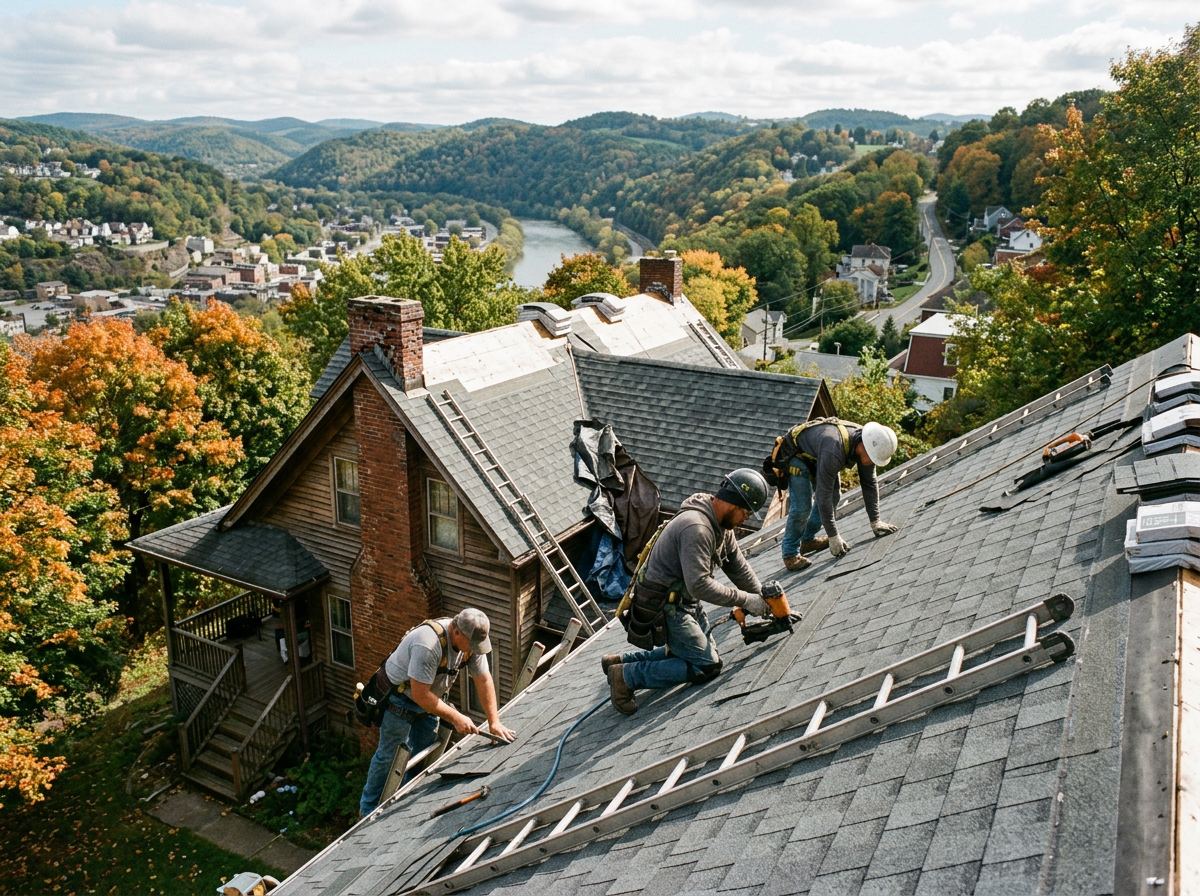
Johnstown homes from the steel-mill era in neighborhoods such as Moxham, Kernville and Cambria City often carry original slate or multiple layers over plank decking on steep slopes. Freeze-thaw cycles, heavy snow load and ridge-top winds create ice dams at eaves and valleys while hail and summer storms add granule loss and missing shingles. These conditions accelerate curling, cupping and leaks around brick chimneys and step flashing on tight-access lots along PA-56 and Menoher Boulevard.
Our crews begin with a hands-on inspection of decking condition, existing layers, soffit intake and ridge ventilation balance before any tear-off. We remove all old material down to the plank deck, install ice and water shield at eaves and valleys, add drip edge and starter strip, then lay architectural shingles with proper step flashing and counter-flashing at chimneys. Re-sheathing with OSB occurs only where sagging is found, and we balance attic ventilation to reduce future ice dam risk on these steep-pitch roofs.
The Laurel Highlands climate brings long snowy winters and strong winds that push snow under standard shingles on homes in Westmont and Richland Township. Older frame houses with narrow streets limit equipment access, so crews work methodically from the ground up using plank decking knowledge to prevent sagging that traps meltwater. This approach keeps water moving off the roof through properly placed valleys and pipe boots even after repeated freeze-thaw events.
Technician insight
In Johnstown, the thing that catches most people out with Architectural Shingles is the plank decking on 1900-1940 homes along the steep slopes in Moxham and Kernville; when freeze-thaw cycles hit, you have to check for sagging before laying new underlayment or the ice dams will still form at the eaves.
Westmont Steep-Pitch Conversion
Old slate on a 1930s home showed multiple slipped pieces and ice dam leaks at the valleys. Inspection revealed sagging plank decking and poor ventilation. Crews performed a full tear-off, re-sheeted weak areas, added ice and water shield and installed architectural shingles with balanced ridge venting. The roof now sheds heavy snow loads without backup at the eaves.
Architectural Shingles Services We Offer
✓Architectural Shingle Full Tear-Off
Complete removal of existing layers down to the deck allows inspection of plank sheathing and proper underlayment placement on steep hillside homes.
✓Slate to Architectural Shingle Conversion
We replace cracked or slipped slate with architectural shingles while addressing the original plank decking and adding ice and water shield suited to Johnstown winters.
✓Ridge Vent and Soffit Ventilation Upgrade
Balanced ridge vent and soffit intake installation improves attic airflow on older homes to reduce ice dam formation along eaves and valleys.
✓Chimney and Wall Flashing Replacement
New step flashing and counter-flashing around brick chimneys prevents leaks where wind-driven snow meets the roof on steep-pitch Johnstown properties.
✓Valley and Pipe Boot Sealing
Rebuilt valleys with ice and water shield plus new pipe boots stop water intrusion at roof intersections common on duplexes and row homes in Kernville.
How it works
- 1
Site Assessment
We examine decking, layers, ventilation and flashing on the steep hillside roof while noting access limits from narrow streets in neighborhoods like Moxham.
- 2
Full Tear-Off
All existing material is removed to expose the plank deck so any sagging or rot can be addressed before new underlayment and ice and water shield go down.
- 3
Underlayment and Flashing
Ice and water shield is applied at eaves, valleys and around chimneys, followed by drip edge and step flashing suited to freeze-thaw conditions.
- 4
Shingle Installation and Ventilation
Architectural shingles are laid with ridge vent and soffit intake balanced to manage snow load and wind on these Laurel Highlands roofs.